
Find Charleston County Resident Records
Charleston County has no single public book of every resident. A property question starts with the assessor card and TMS. A past address belongs in a dated city directory. A court question belongs in the Clerk's Public Index, and a family event may require Probate Court or the state vital-records custodian. Start with the record creator and preserve its date. A matching name alone is weak in a county with deep historical collections.
Compare a middle initial, spouse or co-party, address or TMS, legal description, and time period before connecting two records. The property record can show an assessed owner and the directory can show a person listed at an address in its publication year. Neither is a complete household list.
- For an address, start with the county assessor and record the TMS or PIN.
- Use GIS to confirm the parcel, road, and local jurisdiction.
- Check the Register of Deeds for a recorded party and legal description.
- For a historical household, consult CCPL's dated directory collections and the nearest released census.
- When an online path ends, use the ROD History Room, clerk or probate counter, CCPL, state Archives, or a narrow FOIA request.
Charleston County Parcel Starting Point
The Charleston County Assessor Search is a practical first stop for a known address. Its public parcel cards can show a PIN, data-as-of date, legal-residence and homestead indicators, values, value history, construction details, and a sketch when one exists. The office maintains tax maps, recorded-sale transactions, and permit data for reassessment. An owner mailing address is correspondence data, however, and may differ from the property's situs address.
Use the parcel card to capture the TMS, then compare its situs and legal description with the recorded deed. This makes an ownership question more specific without turning a tax classification into a claim about every household member.
| Assessor field | Use | Boundary |
|---|---|---|
| Owner name | Find a probable current assessed owner | Confirm with parcel and deed |
| Address | Identify the situs parcel | Check unit and street spelling |
| PIN / TMS | Link map, tax, and property work | Not a street address |
| Card date | Place the record in time | Live data can change |
Charleston County Recorded Title Trail
The Register of Deeds files deeds, mortgages, liens, plats, and related instruments. Its online deed and mortgage index or tracer data begin in 1978, while the office reports books dating to 1719 and points pre-1719 conveyance research to the state Archives' Columbia Conveyance Books. Search the present owner as grantee, inspect the deed's book/page and legal description, then search the seller as a prior grantee. Preserve each reference instead of relying on an address match alone.
The ROD portal is the online route, but web coverage is not the whole archive. The History Room supplies physical books and microfilm when an older leg of the trail falls outside the index. That local records story is one of Charleston County's unusual advantages.
Charleston County Court Search Limits
The Charleston County Public Index identifies parties, case numbers, court type, agency, filing or event dates, and public status material where available. Common Pleas coverage begins in 1989, while General Sessions and Family Court online coverage begins in 1992. A missing online result does not prove an older file never existed. The Clerk of Court counter and public terminals are the fallback for record-specific or older questions, subject to sealing and confidentiality rules.
As of January 1, 2026, the Public Index no longer displays home-address information for new or existing cases. A case search can locate a filing, not confirm a current residence. Compare party role, date, court, and case number before treating a result as the intended person.
Charleston County Records Offices
Three offices supply the core resident-record trail. The Register of Deeds holds property instruments. The Assessor identifies the current parcel and appraisal facts. The elections office handles registration and local election services, while MySCVotes is a private individualized verification login. The Clerk of Court and Probate Court answer separate case and estate questions. For a street-by-street address trail, use the focused Charleston County street directory workflow.
Charleston County Register of Deeds
101 Meeting Street, Suite 200
Charleston, SC 29401
843-958-4800
Charleston County Assessor
4050 Bridge View Drive, Suite 100
North Charleston, SC 29405
843-958-4100
Board of Voter Registration & Elections
4340 Corporate Road
North Charleston, SC 29405
843-744-8683
Current Charleston County Records
Current Charleston County resident-directory evidence is distributed by function. Property cards identify assessed ownership of a specific parcel. Recorded instruments identify parties to a transaction. MySCVotes lets a voter review their own authorized registration details, while voter-registration applications are a public-inspection matter under South Carolina law, with privacy limits. Court, probate, vital, license, and business records each document a narrower relationship or event. Use the source that fits the question.
| Source | Who It Lists | Keeper | Access |
|---|---|---|---|
| Assessor parcel card | Assessed owners of identified parcels | County Assessor | Public address, owner, and TMS paths |
| ROD index | Recorded instrument parties | Register of Deeds | Index online, older records at office |
| MySCVotes | A voter's authorized account information | South Carolina elections system | Individual authentication, not a browse list |
| County Public Index | Parties to public court matters | Clerk of Court | Coverage and confidentiality limits apply |
| CCPL city directories | Historical named and address listings | South Carolina Room | Year and locality specific |
For a name that needs careful comparison across several systems, the Charleston County resident lookup workflow keeps each record's scope and date visible.
Charleston Family Record Channels
Vital records are not a general people-search index in South Carolina. DPH holds statewide birth, death, marriage, and divorce certifications. Birth records become public after 100 years under S.C. Code §44-63-80, while death certificates become public after 50 years under §44-63-84. DPH's official death-index files cover 1915 through 1967. Certified copies and applications have identity and eligibility rules, so a historical lead should be paired with directories, census, probate, cemetery, and newspaper sources.
Charleston County Probate Court offers a separate local path for estates, wills, guardianships, and marriage licenses. It reports marriage-license records from 1879 onward. For an estate question, use the decedent's confirmed death lead and inspect the appropriate Probate Court file under its access rules instead of assuming an heir relationship from a search result.
Charleston County Access Fallbacks
When a portal does not hold the needed record, Charleston County has a defined fallback chain. Use the ROD History Room for earlier title material, the Clerk or Probate Court counter for the actual court or estate file, the CCPL South Carolina Room for local-history collections, and the South Carolina Department of Archives and History for older archival series. The City of Charleston Records Center adds a municipal-record route for records created by city departments, often by appointment or a written request.
South Carolina's Freedom of Information Act, title 30 chapter 4, gives access to existing nonexempt public records. A request should identify the custodian, record type, name, date range, and case, document, or TMS number. Section 30-4-30 sets availability-determination deadlines, but the Act does not require an agency to create a new summary. Narrow requests are both clearer and more likely to reach the actual file.
Charleston County Privacy Boundaries
Public records retain real limits. The South Carolina Address Confidentiality Program, created by S.C. Code §16-25-130, can provide an eligible participant a substitute address accepted by state and local agencies and courts. The Public Index provides a route to request web-display redaction of specified account and identifying numbers. Motor-vehicle information, utility customer lists, sealed matters, and confidential court material are not general resident directories.
Lawful use. Use Charleston County records for personal, family-history, civic, property, or safety research. Never use public information to stalk, harass, intimidate, or harm another person.
South Carolina's Family Privacy Protection Act, S.C. Code §30-2-50, restricts knowing commercial solicitation use of personal information obtained from government public records. An official record's date and scope should remain part of every responsible comparison.
Historic Charleston County Directories
CCPL's South Carolina Room is the historical records desk for Charleston County. Its city-directory holdings begin with an early 1735 abstract and major sequences from 1782 onward. Street indexes generally start in 1890, except for 1840–41. The library also holds maps, microfilm, wills and miscellaneous-record indexes, the 1868 Charleston County voter-registration roll, and licensed genealogy databases. A directory can place a printed name at an address for one period, often with an occupation or business clue.
The 1940s and 1950s can require a separate locality search for Navy Base/North Charleston, East of the Cooper, or West of the Ashley. The full year runs, entry conventions, and digital collection paths are on the Charleston County city directory page. Pair a directory with the closest released census and a deed or probate record before describing a household history as settled.
Charleston County Recording Alerts
Charleston County launched a free Register of Deeds Property Recording Alert system in 2025. It sends an email when a recorded document matches a registered name prefix. The alert form uses a last or firm name, first name, and email address, and its FAQ says name fields must contain at least three characters. It is a notice tool for checking a record, not proof that a filing is fraudulent or that an alerted person owns a particular property.
The ROD warns that abbreviations, spelling differences, and name variations can cause false matches or missed matches. If an unexpected instrument appears, preserve the document or book/page reference and verify it with the official Property Recording Alert and Register of Deeds office. A certified copy or office explanation is more dependable than a message alone.
Charleston County Official Portals
These official screens show the separate channels behind a Charleston County residents directory search. Each channel has its own question, access limit, and record date. When a search produces no result, confirm the office's coverage years and use its stated counter, archive, or request channel before treating the absence as an answer.
The Assessor Search is the address-to-parcel starting point.
Its parcel-card path links an address to a TMS and assessment facts, rather than a full household roster.
The County online-services page directs users to county tax, court, permit, and parcel channels.
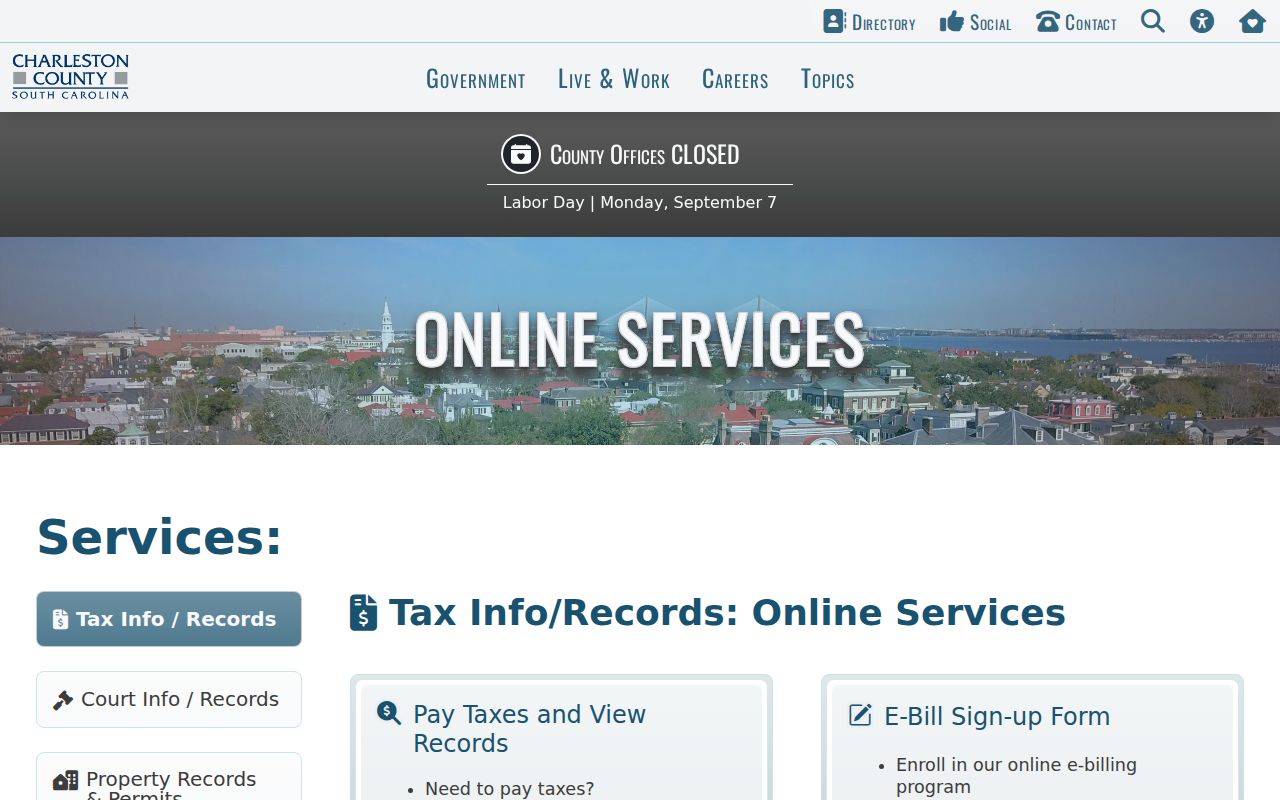
It is a useful gateway when a tax or county-service question follows the initial property search.
The County Public Index is for a specific court matter.
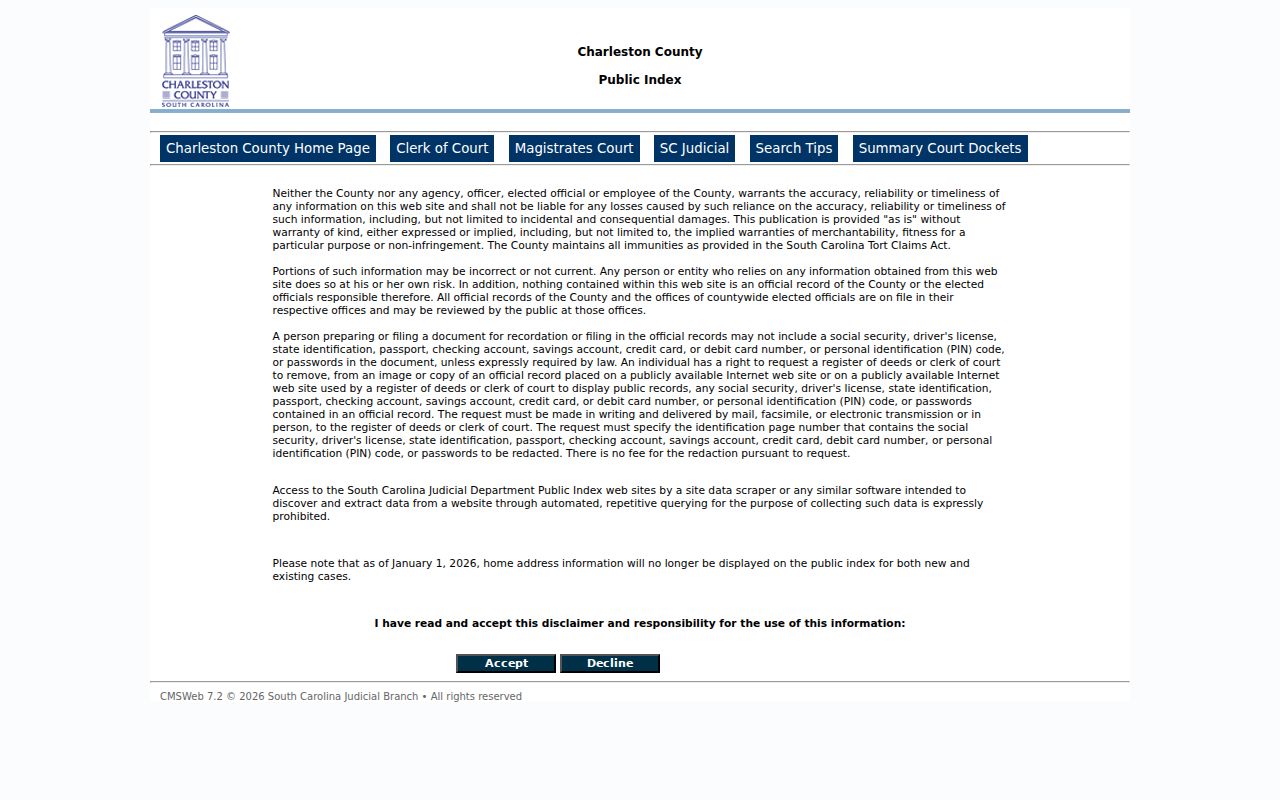
The entry screen's disclaimer reinforces that a web docket is not the official record and does not supply a current home address.
The MySCVotes login is an authorized self-service voter check.
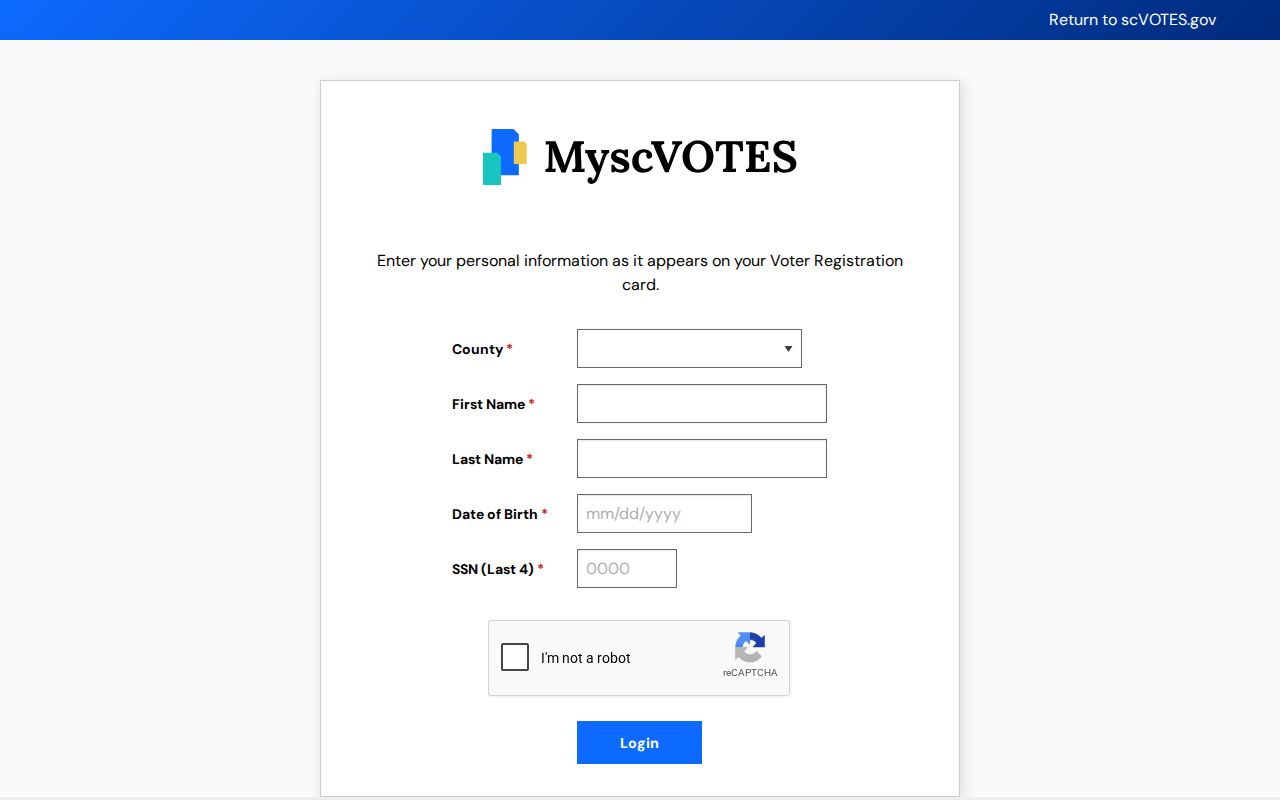
The required personal fields show why this channel is not a public name or street directory.
The Charleston County elections office supplies local registration and records-request contacts.
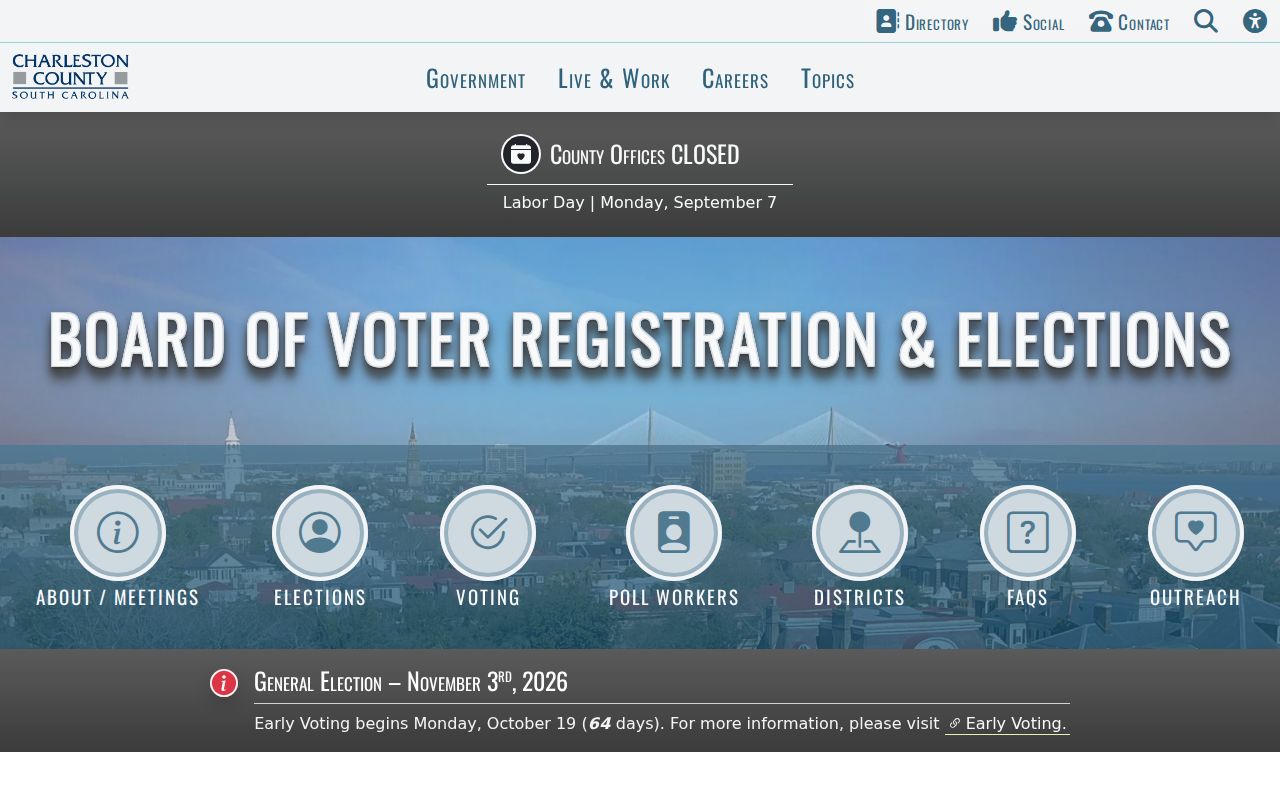
The office is the local channel when a statutory inspection question cannot be answered through a personal login.
The DPH marriage-certificate page explains certified-copy channels and eligibility.
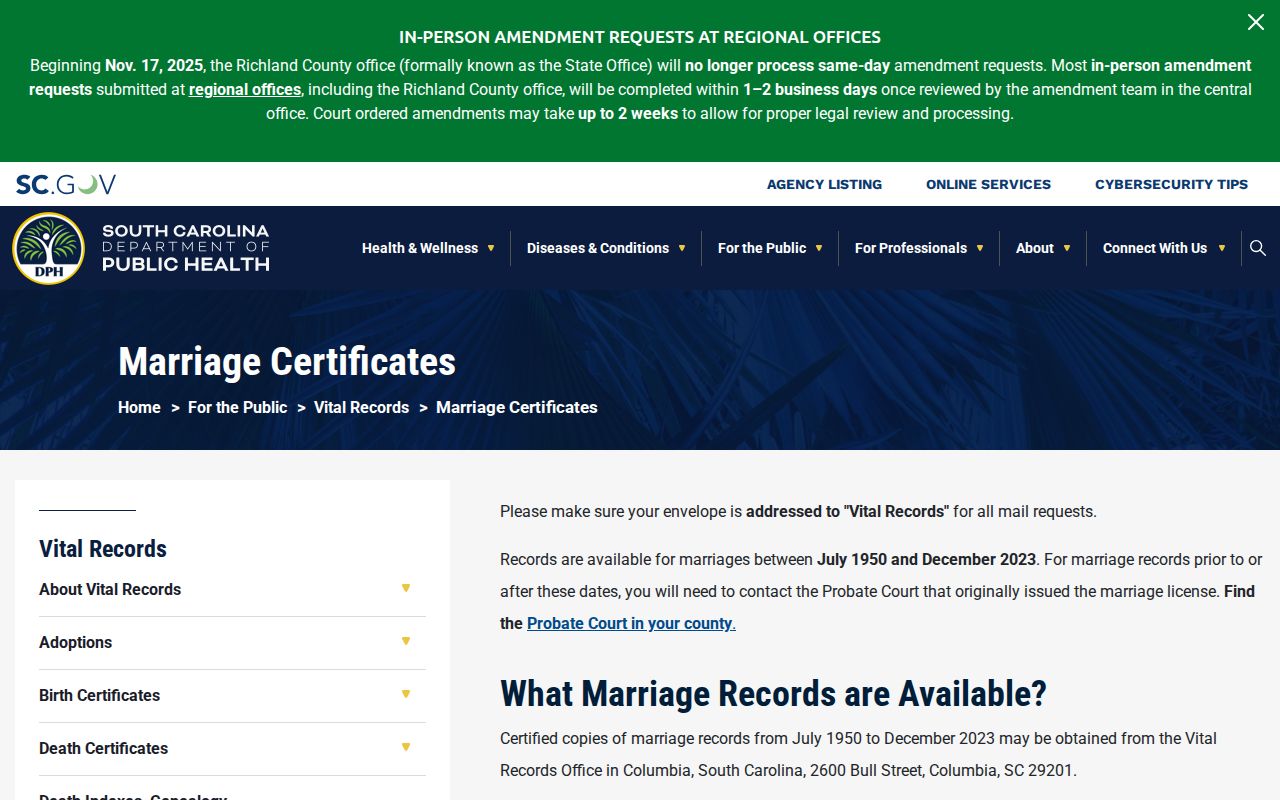
County Probate and DPH use different date bands and access rules for marriage records.
The Sheriff booking search is a limited detention record, not a court disposition.
Any booking result needs the matching court file and the presumption of innocence, not a conclusion about guilt or residence.
The City Records Center handles records created by City of Charleston departments.
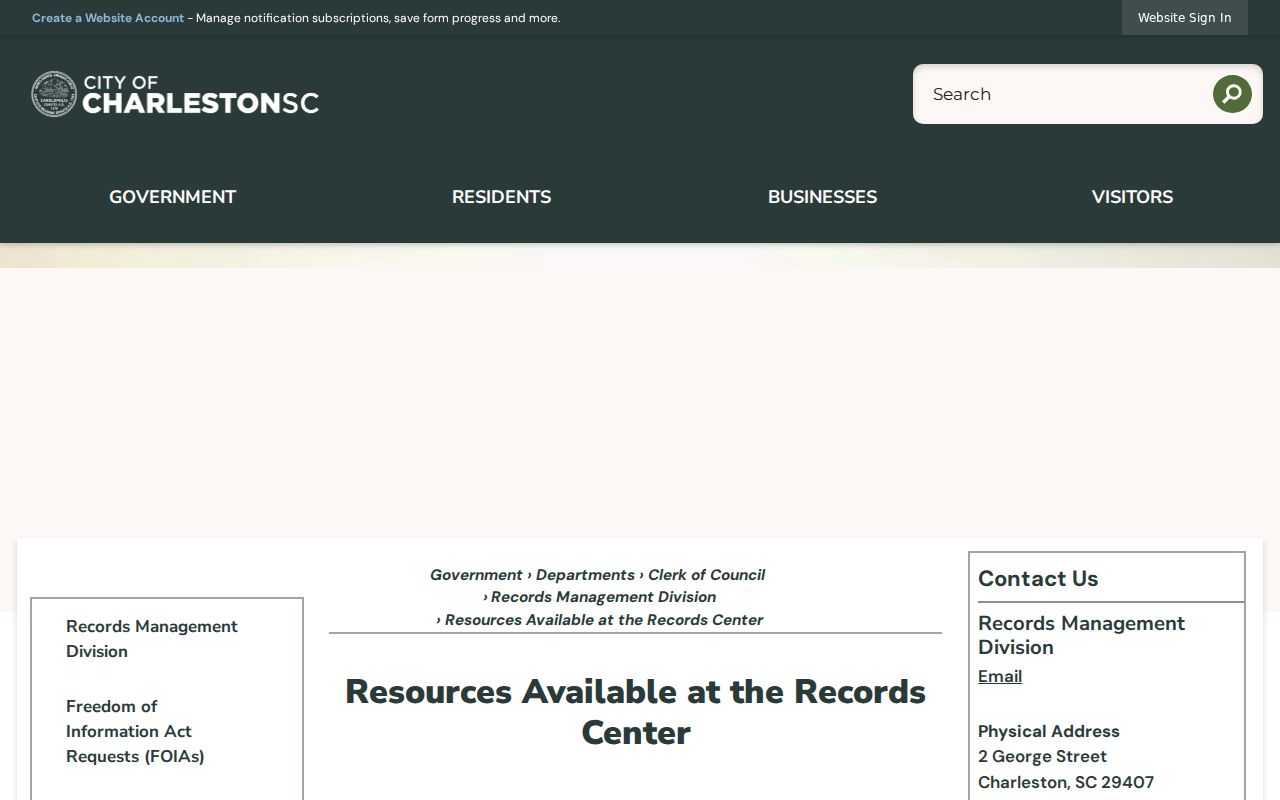
Appointments or a written FOIA request may be required, and city-created records cover only the relevant municipal jurisdiction.